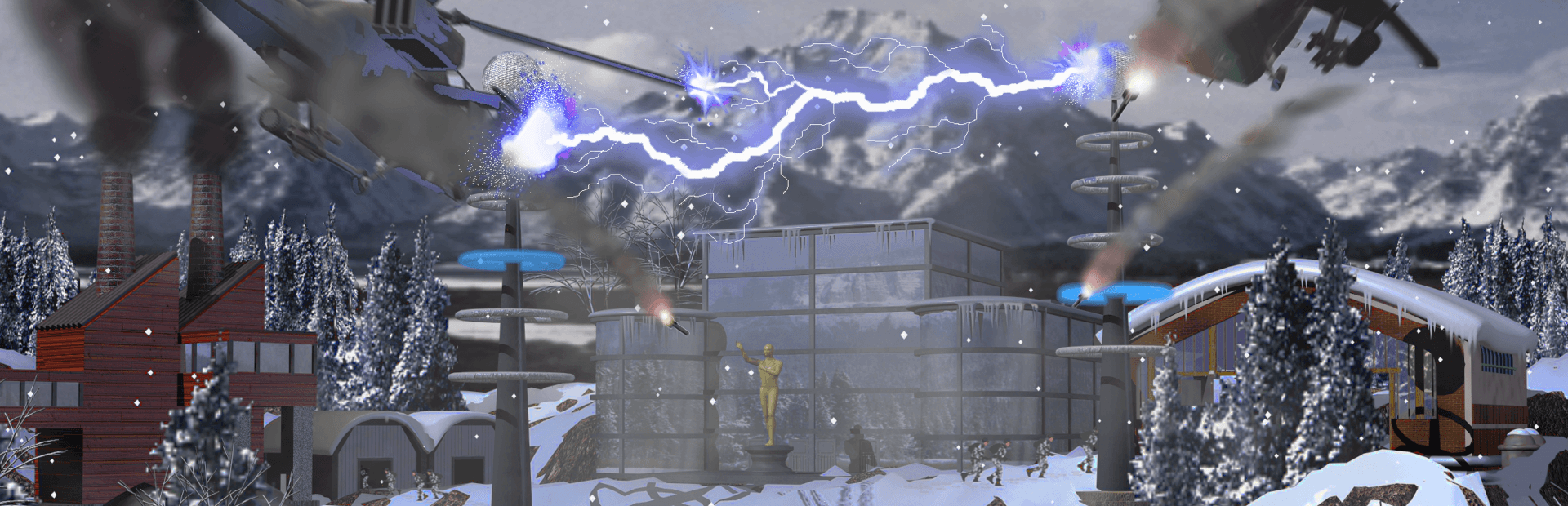

Command & Conquer: Red Alert - Red Dawn
Streaming build
Checking storage…
Preload in background
For players who wore out their mouse buttons on tactical base construction, Command & Conquer: Red Alert - Red Dawn pushed skirmish encounters into immediate, high-stakes territory on MS-DOS.
Custom map design turns base building into an instant knife fight
Most real-time strategy campaigns give you time to breathe, letting you scout terrain, construct a power grid, and set up ore harvesters before the enemy sends a single rifle squad. This expansion pack skips the pleasantries entirely. From the moment the map loads, you are dropped into crowded arenas where the distance between your Construction Yard and the enemy perimeter is dangerously short.
That cramped layout changes every choice you make during the first two minutes of a match. You cannot afford to build three supply trucks and a parade of power plants before laying down defensive structures. If you fail to drop a pillbox or a Tesla coil right next to your primary refinery, enemy light tanks will roll into your base and wipe out your cash flow before your radar dome even turns on.
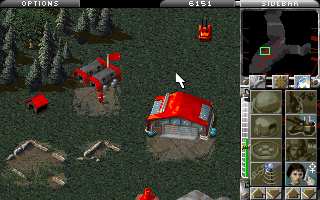
The top-down perspective gives you complete visibility over your base footprint, but it also reveals just how little room you have to manoeuvre. Spacing out your structures is essential to prevent splash damage from artillery and airstrikes, yet the tight boundaries on these custom levels actively fight against neat layouts. Building a functional base becomes a puzzle where every tile counts.
Why Command & Conquer: Red Alert - Red Dawn punishes bad ore management
Economy drives everything in this game, and the map layouts featured here make resource gathering a constant nightmare. Ore fields and gem patches are often tucked into contested valleys or squeezed between natural choke points. Sending a slow, expensive harvester out into un-scouted territory without an armored escort is standard suicide.
Managing your credits requires balanced production schedules rather than simple hoarding. You have to juggle several demands at once:
- Securing choke points near gem fields with heavy infantry and fixed gun emplacements.
- Replacing lost ore harvesters immediately to avoid fatal economic stalls.
- Maintaining sufficient power output so your base defenses stay active during heavy assaults.
- Pumping out mixed tank fleets to prevent fast flank attacks on your rear buildings.
When an economic collapse happens, it happens fast. If an enemy detachment manages to destroy your main refinery while your tanks are away attacking their base, your income stops instantly. Without cash to repair damaged structures or replace destroyed power plants, your base defenses shut off one by one, leaving your remaining buildings completely defenseless.
The brutal multiplayer maps of Command & Conquer: Red Alert - Red Dawn
While the single-player skirmish mode against computer opponents offers plenty of friction, playing Sorry Software's custom map collection in multiplayer mode reveals the real intent behind these designs. Maps engineered for high player density transform every match into a frantic war of attrition. There are no safe corners where you can quietly build an unstoppable super-army unmolested.
The interface remains snappy and responsive on strategy / tactics standards from 1997. Selecting groups of units, setting waypoint paths, and assigning control groups allow experienced players to micromanage two battlefronts simultaneously. You can execute a distraction raid with light cavalry on one side of the map while sneaking heavy artillery into range on the other.
The flaw in this setup comes down to pathfinding on dense terrain. When you order a large column of tanks through narrow mountain passes, units often jam against each other, exposing their rear armor to enemy fire while they struggle to turn around. Success depends on babysitting your armor columns through tricky terrain rather than trusting the automatic pathing.
How top-down tactical planning falls apart under heavy fire
Executing a successful strategy requires constant adaptation because no static defense holds forever. A line of Tesla coils and gun turrets might look impenetrable, but a clever opponent will use long-range V2 rocket launchers or naval bombardment to pick them off from beyond visual range. You are forced to remain aggressive, pushing out patrol units to maintain fog-of-war coverage around your borders.
The sound design plays a huge mechanical role in keeping you alive. Hearing the specific hum of charging energy weapons, the distinct clatter of treads, or the siren warning of an incoming nuclear launch gives you vital seconds to react. On an old Sound Blaster setup, those audio cues provided actionable intelligence long before an enemy attack force appeared on your main viewscreen.
Published by Sorry Software, this set of custom skirmish scenarios took full advantage of the gritty 1990s PC gaming aesthetic. The visuals keep structural silhouettes distinct, letting you immediately identify critical target priorities like power plants or radar facilities during the middle of a chaotic firefight.
Fire up the DOS version without touching a setup file
The appeal of these levels lies in their unyielding pace and tight focus on unit control. There are no prolonged build phases or empty map spaces to wander through. Every square inch of terrain presents an active tactical challenge that demands your full attention from the opening frame.
You can jump straight in and play Command & Conquer: Red Alert - Red Dawn online directly through your web browser today. There is no software to install and no setup process to configure, giving you full access to this Command & Conquer: Red Alert - Red Dawn MS-DOS game in seconds. Launching Command & Conquer: Red Alert - Red Dawn free in your browser puts you straight onto the battlefield where quick mouse reflexes and aggressive resource management determine who survives the first rush.
2 screenshots
From the archive
No gameplay video yet
No gameplay video for Command & Conquer: Red Alert - Red Dawn yet. Sign in to add one.
No reviews yet
Tell the community what you think of Command & Conquer: Red Alert - Red Dawn. Reviews are public and tied to your username.
No archived manuals for Command & Conquer: Red Alert - Red Dawn yet
No manuals archived for this title yet. Sign in to upload the first scan.
Cheat codes, console commands and memory pokes for Command & Conquer: Red Alert - Red Dawn — each one verified and attributed.
Sign in to submitNo cheats yet for this title
Know a working cheat, poke or trainer? Add it with the button above. Moderators check every entry before it goes live.
No archived soundtrack for Command & Conquer: Red Alert - Red Dawn yet
No soundtrack archived for this title yet. Sign in to upload the first rip.
No save states for Command & Conquer: Red Alert - Red Dawn yet
No save states for this title yet. Sign in to share one.
Discussions
Sign in to post- Threads0
- Total posts0
- Online now6
Community · Command & Conquer: Red Alert - Red Dawn
Who's contributing, and what's new
- Reviews0
- Threads0
- Uploadsapproved0
- Contributors0
Recent activity
Nothing here yet
Reviews, discussion threads and approved uploads appear here as members add them.