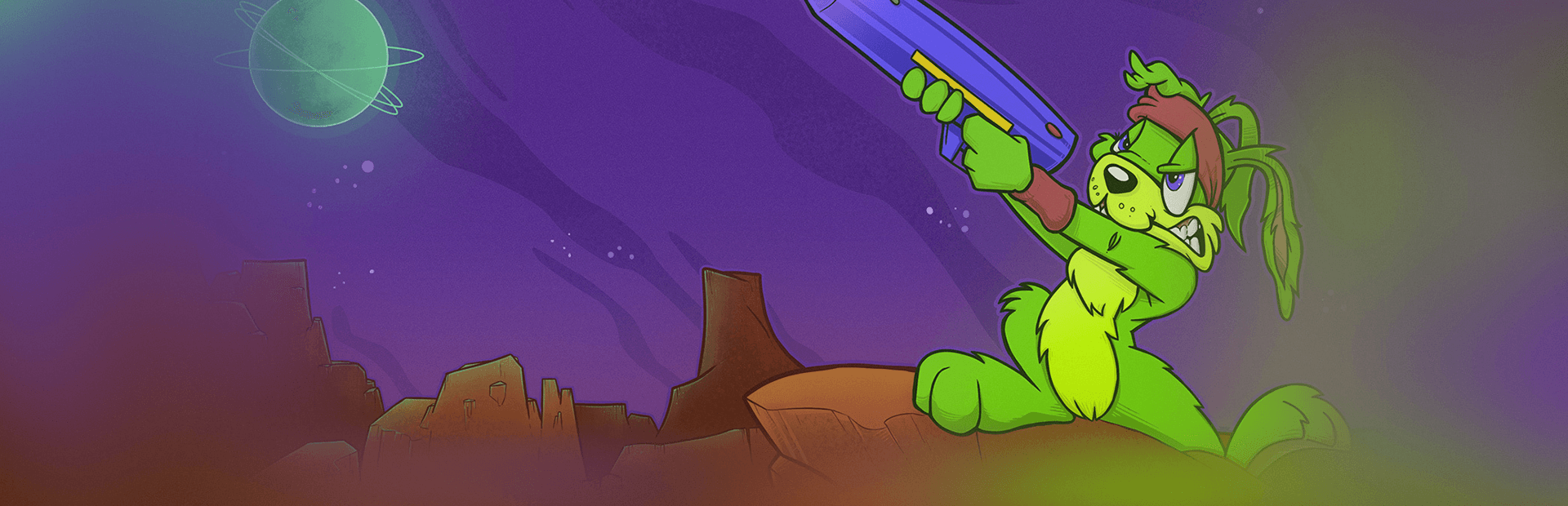
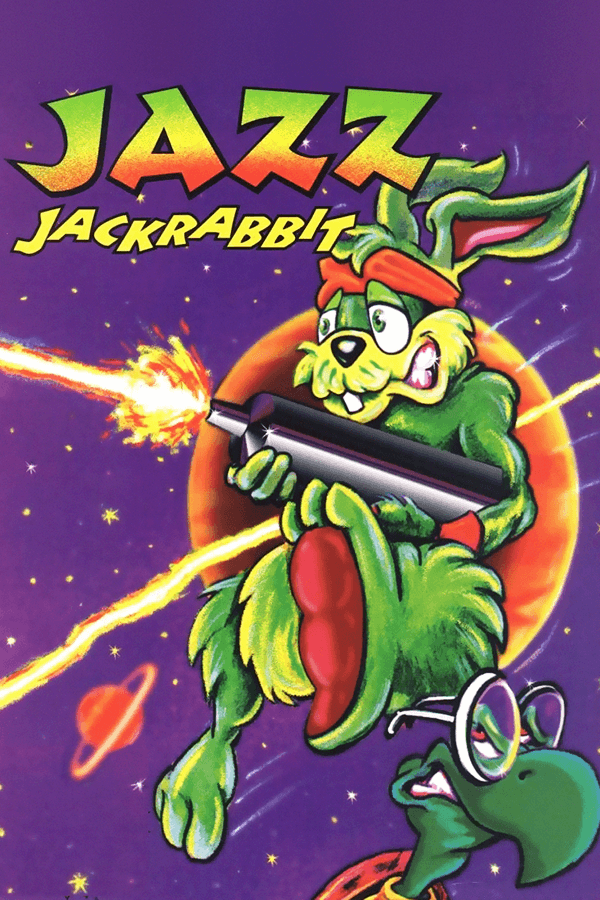
Jazz Jackrabbit
Jazz Jackrabbit delivered the lightning fast pacing of console platformers to PC screens in 1994, replacing head-bopping with high-speed artillery. Built around momentum, explosive weaponry, and vibrant VGA graphics, it stands out as one of the defining DOS titles of its era.
When momentum and heavy firepower click together in Jazz Jackrabbit
Playing Jazz Jackrabbit for the first time demands a mental shift away from standard 16-bit platformers. You do not crush enemies by jumping on their heads. You run through levels at breakneck speed while holding down the fire button to vaporize everything in your path.
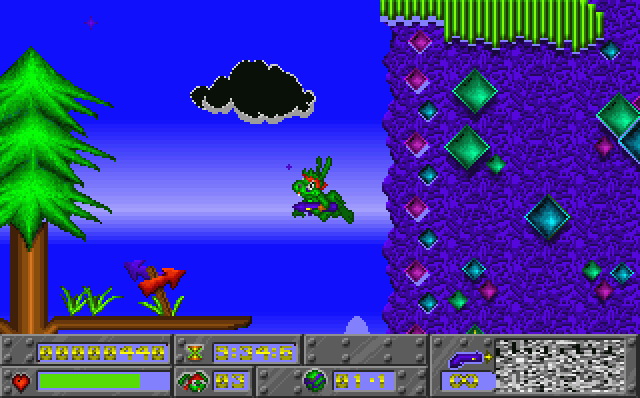
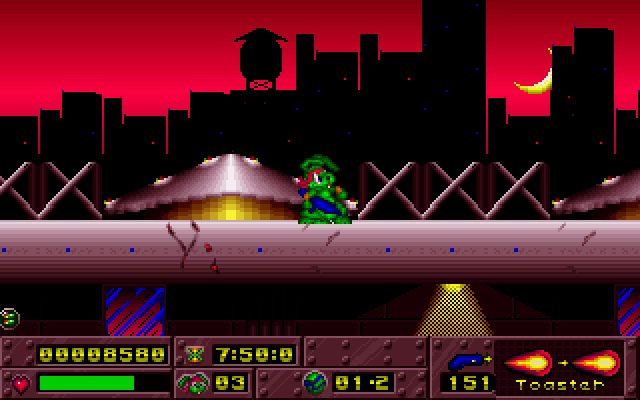
The movement physics take a moment to master. As you press a direction, the green hare accelerates until a visual motion blur trails behind him. Jumping at maximum velocity launches you across massive screen-filling gaps, but running blindly into off-screen hazards will quickly drain your health bar.
The opening planet, Diamondus, serves as a masterclass in establishing this flow. You dash past cartoon turtle guards, collect floating carrots to restore health, and weave through loop-de-loops before slamming into speed boosters. It is frantic, noisy, and remarkably responsive.
Why a side-scrolling shooter mattered for PC gaming in 1994
During the early nineties, IBM-compatible PCs struggled to replicate the smooth hardware scrolling of the Sega Genesis or Super Nintendo. Most computer platformers felt sluggish or rigid by comparison. That changed when coder Arjan Brussee designed a custom fast-scrolling engine for Epic MegaGames, Inc..
Designer Cliff Bleszinski paired that high-performance engine with a sci-fi parody of The Tortoise and the Hare fable. The plot sends Jazz across outer space to rescue Princess Eva Earlong from turtle terrorist Devan Shell. The result was an energetic action game that finally gave PC owners a title capable of matching console speeds.
The presentation embraced mid-nineties arcade culture. Bright 256-color VGA graphics were paired with a high-energy tracker soundtrack composed by Robert Allen. The punchy music and fluid sprite animations helped make this 1994 release an immediate hit across shareware channels.
An arsenal that redefines platforming action
While the game shares speed mechanics with Sega's flagship rabbit-like runner, the core loop is fundamentally a run-and-gun shooter. You begin with a basic blue blaster that fires unlimited shots. As you explore branching stage paths, you discover specialized ammunition that changes your combat strategy entirely.
Choosing the right weapon for the terrain is crucial. Here are the primary tools in your arsenal:
- Blaster: Your default gun with infinite ammo, ideal for clearing basic ground enemies.
- Toaster: A short-range flamethrower that melts obstacles and incinerates flying targets.
- RF Missile: Fires twin rockets that trajectory-lock onto distant threats.
- Bouncer: Bouncing grenades that clear out tight corridors and lower floor segments.
- TNT: Screen-clearing explosives that destroy hidden walls and tough bosses.
Power-ups further alter your movement options. Picking up a hoverboard lets you float over dangerous spike pits, while a temporary force shield absorbs incoming projectile damage. You can even rescue a helper bird that flies alongside you, providing extra cover fire against airborne enemies.
Blind drops and camera limits reveal where the design stumbles
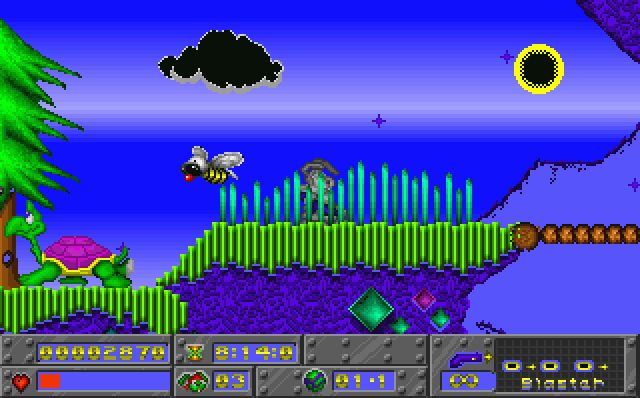
Despite its technical achievements, the game suffers from a key hardware constraint of its era. Because the display resolution was limited to 320x200 VGA, the viewport sits very close to the main character. When moving at top speed, you often cannot see what lies directly ahead.
This narrow field of view leads to frequent punishment for running fast. You will often charge down a hill at full speed only to slam straight into an unseen enemy or a bed of spikes. The game attempts to solve this by providing directional arrows, but the threat of blind damage remains a constant annoyance.
The boss fights also fail to match the quality of the main levels. Boss encounters usually devolve into standing in place and button-mashing your strongest special ammunition until the target explodes. The balance relies heavily on memorization rather than pure reflexes.
The final verdict on this classic shareware shooter
For players curious about early PC gaming history, a definitive Jazz Jackrabbit review comes down to adjusting your expectations. The weapon variety, driving soundtrack, and buttery smooth scrolling retain their retro charm. However, the tight camera viewport and repetitive boss encounters keep it from perfect platforming bliss.
The title remains a essential piece of software history for Epic Games, launching the career of lead designer Cliff Bleszinski years before he created Unreal and Gears of War. Anyone who appreciates fast 90s action should spend an afternoon with this influential title.
If you want to experience this landmark published by Epic MegaGames, Inc. release, you can play Jazz Jackrabbit online right away. You can launch Jazz Jackrabbit free in your browser without downloading setup files or managing local DOS configurations. The browser version delivers the complete Jazz Jackrabbit MS-DOS game experience directly through WebAssembly emulation, letting you jump straight into planet Carrotus with zero setup headaches.