
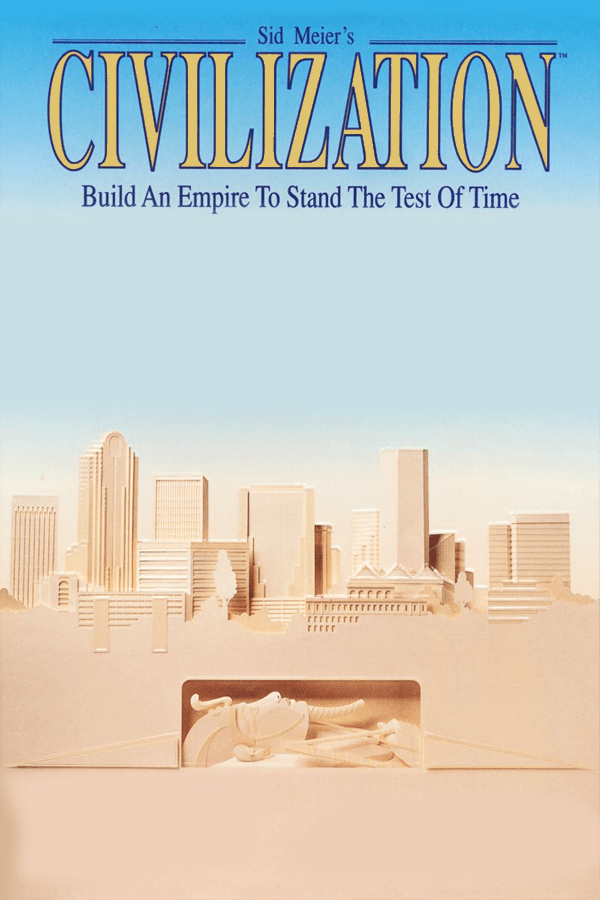

Playing Sid Meier's Civilization for the first time usually means watching a handful of Settlers plant a mud village in 4000 BC and promising yourself you will stop after just one more turn. Six hours later, your audio card is humming a synthesized rendition of Beethoven while your battleships bombard a rival capital in a desperate bid to win the space race.
You begin on an unexplored world map with a single Settler unit. The opening turns move quickly. You found your first city, assign your citizens to harvest nearby tiles for food, and send your primitive militia out into the black fog of war.
Every city is a delicate balance of resources. Citizens need food to grow, production shields to build infrastructure, and trade arrows to fund your empire. You adjust sliders to divide trade revenue into tax income, scientific research, or luxury spending. Neglect your public happiness, and your urban centres collapse into civil disorder, halting all production until you restore order.
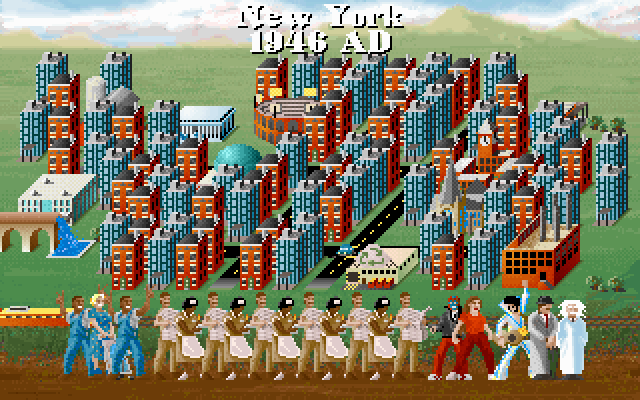
Progress relies heavily on the tech tree. You start with basic knowledge like the Alphabet or Bronze Working. Each breakthrough unlocks new military units, government choices, or economic buildings. Researching Automobile boosts your economy, but it also introduces pollution tiles that threaten global warming if left unchecked.
Winning requires either total military conquest or launching a colony ship to Alpha Centauri before time runs out. Victory demands constant long-term planning across multiple fronts.
Designers Sid Meier and Bruce Shelley built the project at MPS Labs after working together on Railroad Tycoon. They wanted to combine high-level empire expansion with the tile-based pacing of physical board games. MicroProse Software, Inc. released the final game on MS-DOS in 1991.
The audio design took full advantage of the sound hardware of the era. Sound Blaster owners heard punchy digital effects, while players with a Roland MT-32 module enjoyed rich orchestral arrangements for historical leaders. B.C. Milligan, Jeffery L. Briggs, and Bruce Shelley authored the Civilopedia, an in-game encyclopedia that gave historical context for every technology and unit.
The game was a massive commercial hit for publisher MicroProse Software, Inc., eventually selling more than 1.5 million copies. Its success established a whole lineage of sequels and computer ports across multiple systems.
Despite its brilliance, certain mechanics create genuine frustration during prolonged playthroughs. The turn-based combat system uses random number generation that occasionally produces absurd outcomes. Every long-time player has a story about an archaic spear unit destroying an advanced modern ironclad or battleship.
Diplomacy also breaks down in the late game due to hardcoded artificial intelligence behavior. After 1 AD, if you control the top power ranking and do not own nuclear weapons, every computer-controlled nation with multiple cities will automatically betray you. Friendly neighbors suddenly declare war regardless of your diplomatic history or signed treaties.
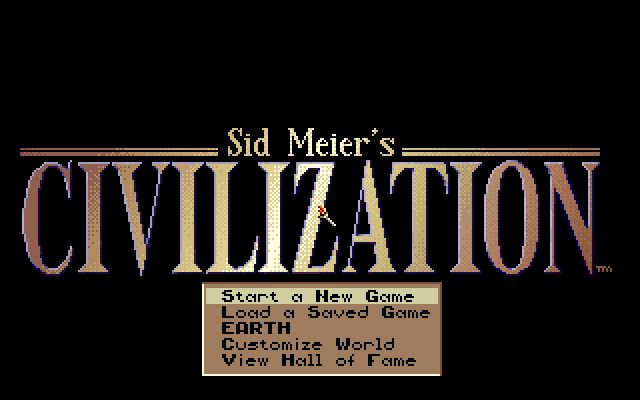
Managing a massive global empire becomes tedious as your border count expands. Moving dozens of individual units across huge maps takes minutes per turn. The DOS original lacks a quick-reload button, forcing you to quit to the main menu or exit to DOS just to load a saved file.
Players eventually discovered workarounds and shortcuts. The famous Settler turn glitch lets you instantly complete tile improvements by reactivating Settlers on the same turn. In specific software versions, typing Shift+5 and Shift+6 ("%^") acts as a built-in map reveal cheat code, exposing every continent and unlocking debug menus.
The core design loop remains intensely satisfying today. Balancing research goals against immediate military threats creates constant tension. Choosing between building a game-changing Wonder like the Pyramids or pumping out defensive phalanx units forces hard trade-offs every single turn.
If you want to understand how modern turn-based strategy tactics games were born, this title is where it all started. It demands clear forward thinking and rewards creative economic planning like few other titles from 1991.
You can play Sid Meier's Civilization online right now in your browser. There is nothing to install, so you can jump straight into the DOS classic, settle your first city, and see if you can guide your people to the stars tonight.
Playing Sid Meier's Civilization for the first time usually means watching a handful of Settlers plant a mud village in 4000 BC and promising yourself you will stop after just one more turn. Six hours later, your audio card is humming a synthesized rendition of Beethoven while your battleships bombard a rival capital in a desperate bid to win the space race.
You begin on an unexplored world map with a single Settler unit. The opening turns move quickly. You found your first city, assign your citizens to harvest nearby tiles for food, and send your primitive militia out into the black fog of war.
Every city is a delicate balance of resources. Citizens need food to grow, production shields to build infrastructure, and trade arrows to fund your empire. You adjust sliders to divide trade revenue into tax income, scientific research, or luxury spending. Neglect your public happiness, and your urban centres collapse into civil disorder, halting all production until you restore order.
Progress relies heavily on the tech tree. You start with basic knowledge like the Alphabet or Bronze Working. Each breakthrough unlocks new military units, government choices, or economic buildings. Researching Automobile boosts your economy, but it also introduces pollution tiles that threaten global warming if left unchecked.
Winning requires either total military conquest or launching a colony ship to Alpha Centauri before time runs out. Victory demands constant long-term planning across multiple fronts.
Designers Sid Meier and Bruce Shelley built the project at MPS Labs after working together on Railroad Tycoon. They wanted to combine high-level empire expansion with the tile-based pacing of physical board games. MicroProse Software, Inc. released the final game on MS-DOS in 1991.
The audio design took full advantage of the sound hardware of the era. Sound Blaster owners heard punchy digital effects, while players with a Roland MT-32 module enjoyed rich orchestral arrangements for historical leaders. B.C. Milligan, Jeffery L. Briggs, and Bruce Shelley authored the Civilopedia, an in-game encyclopedia that gave historical context for every technology and unit.
The game was a massive commercial hit for publisher MicroProse Software, Inc., eventually selling more than 1.5 million copies. Its success established a whole lineage of sequels and computer ports across multiple systems.
Despite its brilliance, certain mechanics create genuine frustration during prolonged playthroughs. The turn-based combat system uses random number generation that occasionally produces absurd outcomes. Every long-time player has a story about an archaic spear unit destroying an advanced modern ironclad or battleship.
Diplomacy also breaks down in the late game due to hardcoded artificial intelligence behavior. After 1 AD, if you control the top power ranking and do not own nuclear weapons, every computer-controlled nation with multiple cities will automatically betray you. Friendly neighbors suddenly declare war regardless of your diplomatic history or signed treaties.
Managing a massive global empire becomes tedious as your border count expands. Moving dozens of individual units across huge maps takes minutes per turn. The DOS original lacks a quick-reload button, forcing you to quit to the main menu or exit to DOS just to load a saved file.
Players eventually discovered workarounds and shortcuts. The famous Settler turn glitch lets you instantly complete tile improvements by reactivating Settlers on the same turn. In specific software versions, typing Shift+5 and Shift+6 ("%^") acts as a built-in map reveal cheat code, exposing every continent and unlocking debug menus.
The core design loop remains intensely satisfying today. Balancing research goals against immediate military threats creates constant tension. Choosing between building a game-changing Wonder like the Pyramids or pumping out defensive phalanx units forces hard trade-offs every single turn.
If you want to understand how modern turn-based strategy tactics games were born, this title is where it all started. It demands clear forward thinking and rewards creative economic planning like few other titles from 1991.
You can play Sid Meier's Civilization online right now in your browser. There is nothing to install, so you can jump straight into the DOS classic, settle your first city, and see if you can guide your people to the stars tonight.
How Sid Meier's Civilization is played — the keys the game listens to, grouped by what they do.
Highlighted keys are mapped — hover or tap one to see what it does.
Keyboard controls support full gameplay without a mouse.
Cheat codes, console commands and memory pokes for Sid Meier's Civilization — each one verified and attributed.
Sign in to submitHow Sid Meier's Civilization is played — the keys the game listens to, grouped by what they do.
Highlighted keys are mapped — hover or tap one to see what it does.
Keyboard controls support full gameplay without a mouse.
Cheat codes, console commands and memory pokes for Sid Meier's Civilization — each one verified and attributed.
Sign in to submit