
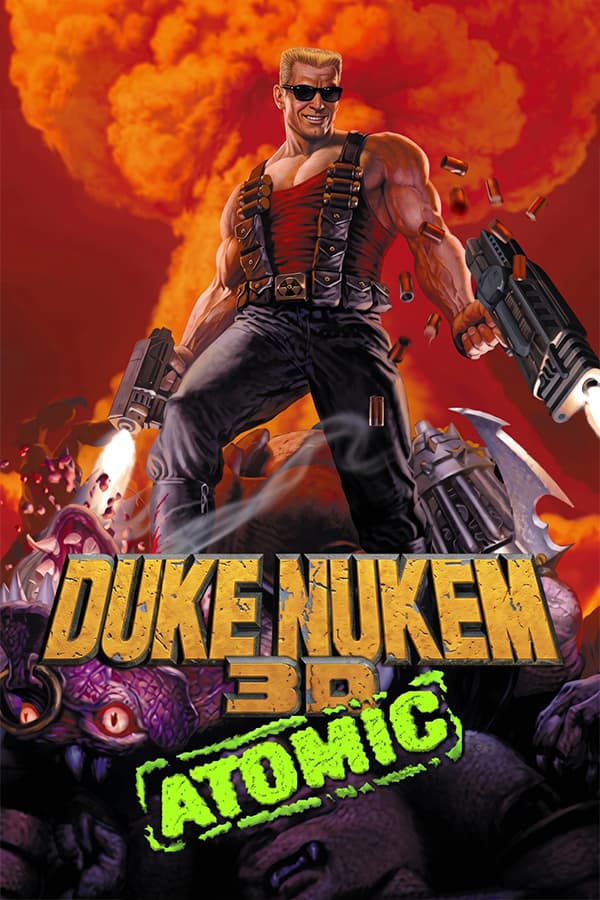

When Duke Nukem 3D: Atomic Edition hit PC displays, it proved that smart level design and pure interactive sandbox interactivity meant far more than raw polygon counts. Rather than forcing players down quiet, clinical corridors, this expanded MS-DOS release offered dirty city streets, exploding movie theaters, and a weapon wheel built entirely for creative mayhem.
The Build engine transformed interactive spaces into chaotic playgrounds
Most shooters in the mid-nineties asked you to move forward, clear a room of monsters, and hunt for a color-coded keycard. Ken Silverman created the Build engine to break those boundaries, giving level designer Allen Blum and project leader George Broussard the freedom to construct actual locations rather than abstract mazes. You start in Hollywood Holocaust, landing on a roof before dropping into an alley behind a movie house, and instantly you realize nearly everything on screen responds to a bullet or a boot.
You can shoot light switches to dim a room, shatter ventilation grills to crawl through air ducts, or kick open bathroom stalls to catch alien invaders unawares. That environmental feedback hit fast on a Sound Blaster card cranked up loud next to a buzzing desktop monitor. Survival was only half the job; you were tearing through interactive city blocks with an arsenal designed to let you show off.
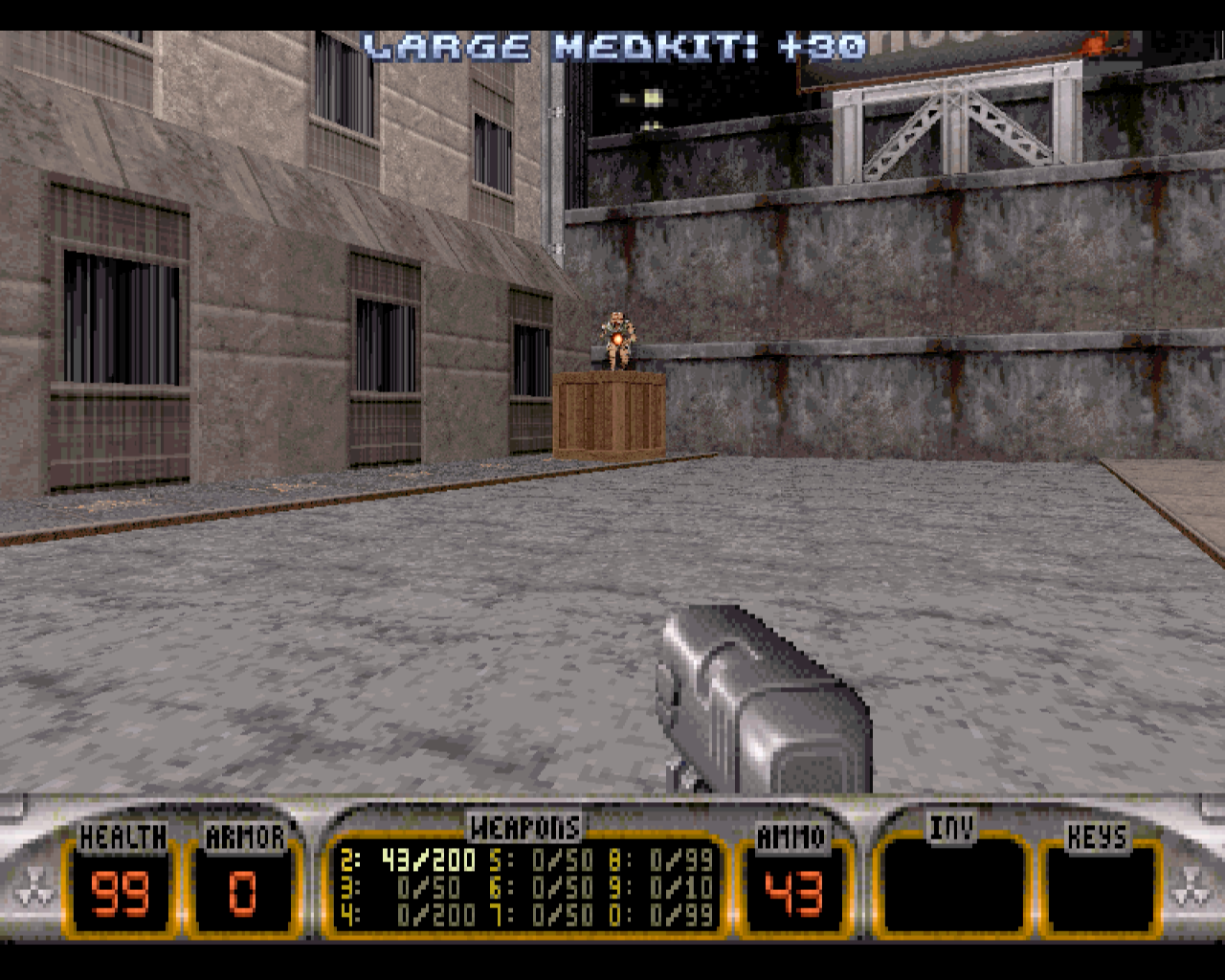
That freedom came with serious spatial variety across the original three episodes, taking players from L.A. Meltdown and Lunar Apocalypse into Shrapnel City. To navigate flooded subways in aquatic levels like Flood Zone, you had to manage scuba gear oxygen meters while dodging submerged creatures. When vertical height got in the way, strap on a jetpack to float past alien sentries or drop pipebombs onto LAPD Pig Cops from above.
Episode 4 expands Duke Nukem 3D: Atomic Edition with absurd new locations
While the initial three-episode release was already massive, this version added "The Birth", an eleven-level fourth episode packed with some of the most memorable maps in 3D Realms Entertainment history. Level designers like Randy Pitchford and Keith Schuler leaned heavily into dark humor and real-world satire, dropping Duke into places like Duke-Burger, Shop-N-Bag, Babe Land, and Area 51. The episode culminates in a brutal showdown inside an alien hive against The Queen, who lays eggs that hatch mini-sized enemies if left unchecked.
Episode 4 also introduced the microwave-based expander weapon alongside new threat types like flying pigs and tiny cloned alien critters. The level design in maps like Going Postal and Pigsty forced fast movement, because tight corridors meant a single miscalculated RPG rocket could wipe out your own health bar instantly. If you were playing on the hardest difficulty setting, "Damn I'm Good", enemy respawns meant standing still for even five seconds was a guaranteed death sentence.
This edition came packaged on CD-ROM by GT Interactive Software Corp., bundled with bonus desktop goodies including Windows screen savers, jigsaw puzzles, and image galleries. Yet the real draw was always those extra maps, which pushed the engine to its limits with sprawling multi-tiered layouts like Derelict and Fahrenheit.
Precision aiming demands patience, but weapon tricks soften the blow
Going back to a classic action game often reveals control quirks that retro reviews gloss over. Mouse aiming without vertical crosshair snapping can feel loose or slippery on modern setups unless you spend time tweaking control sensitivity. Without true vertical free-look enabled by default, hitting small targets like mini-aliens requires patience, tight movement, or a quick blast from a shrink ray to turn them into bug-sized targets you can simply step on.
To overcome stiff targeting, experienced players relied on weapon mechanics and terrain exploits. Here are the key habits that separate a casual run from a flawless campaign sweep:
- Pipebomb stacking: Tossing a pipebomb and tapping the weapon hotkey for number 6 lets you drop several remote charges before detonating the entire sequence simultaneously.
- Shrink and stomp: Firing the shrink ray at heavy alien troops shortens their stature, letting you walk right over them for an immediate single-step kill.
- Steroid speed boosts: Popping steroids instantly cures freeze effects and lets you sprint past heavy fire in map hazard zones.
- Secret blimp sniping: Shooting down the distant "Duf Beer" blimp in the final mission of Episode 3 drops an immediate cache of health and ammunition.
Even environmental geometry had its quirks. In early engine revisions, using wall-clipping exploits carelessly or stepping wrong into unstable wall geometry resulted in instant physics deaths, crushing Duke flat in empty space. The high difficulty setting explicitly locked out standard typing cheats, forcing hardcore players to hunt down secret armor pickups or perform risky trick jumps to survive intense room traps.
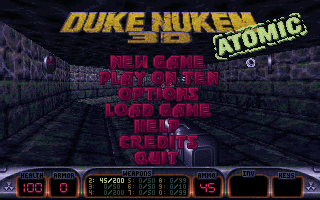
Secret codes and developer humor rewarded curious PC gamers
typing codes directly on the keyboard was half the fun of playing a 1996 PC release. Typing DNKROZ or DNCORNHOLIO granted full invincibility, while DNSTUFF loaded Duke with every key, gun, and utility item in the game. If you wanted to skip straightforward progression, typing DNSCOTTY followed by episode and level digits let you warp anywhere from Toxic Dump to the deep shafts of The Abyss.
The programmers filled the command buffer with funny internal Easter eggs for fans who tried obscure combinations. Entering DNBETA printed "Pirates Suck!" across the display, while entering DNTODD or DNALLEN displayed humorous plugs encouraging players to buy earlier 3D Realms shareware titles like Cosmo's Cosmic Adventure or Major Stryker. There was even a hidden interaction in Episode 4 where walking behind a Pig Cop tank and pressing the use key on its atomic symbol forced the vehicle to instantly self-destruct.
Audio design played just as big a role in that personality. Composer Lee Jackson crafted an aggressive midi soundtrack led by its driving main theme, while voice actor Jon St. John delivered low-register one-liners that defined Duke's action-hero persona. Combined with crisp sound effects tailored for Creative Labs Sound Blaster hardware, every shotgun pump and pipebomb blast carried serious acoustic punch.
Relive Duke Nukem 3D: Atomic Edition in your web browser
While console ports stripped away adult humor, converted strip clubs into fast-food joints, and compressed textures, the classic MS-DOS build remains the definitive version of this shooter. Its combination of clever spatial puzzles, secrets hidden behind crackable walls, and fast movement speed keeps the level flow active from start to finish. If you want to jump into Hollywood Holocaust or test your skills in Area 51, you do not need to hunt down original floppy disks or configure complex sound card IRQ settings.
You can run Duke Nukem 3D: Atomic Edition online free in your browser right now with zero installation. Fire up the first episode, grab the shotgun off the roof in Hollywood Holocaust, and shoot out the cinema screen to find your very first secret passage within seconds of spawning.