


In Litil Divil, you guide a small red demon named Mutt through five hellish maze levels in search of the Mystical Pizza of Plenty. Behind the cartoon animation sits a surprisingly harsh test of patience built on precise positioning and brutal trial and error.
Navigating the Labyrinth of Chaos
The core structure splits into two distinct modes that repeat across the entire adventure. You explore the maze from an over-the-shoulder 3D perspective, turning corners and dodging hallway traps like wall-mounted fists and sudden spike pits. Once you step into a door, the action shifts to a static single-screen challenge containing a puzzle, a trap, or a boss encounter.
Every level begins with a mandatory stick-fight against a bridge troll before you can explore the deeper corridors. Inside the maze, Mutt must collect piles of coins to spend at the shop, picking up vital tools like bug spray to clear out a giant spider room. To clear an act and move deeper into the underworld, you must find three specific progression items scattered across the rooms, including an anvil and a heart pierced by an arrow.
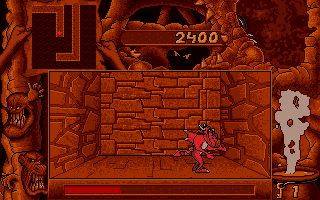
The variety of challenges inside the fifty-plus rooms keeps you guessing, but the game logic is notoriously strict. You might stumble into a furnace room, face down a door guardian, or run into a hostile bartender, with each location asking for a specific item or exact sequence of actions to survive.
Why Litil Divil enraged DOS players in 1993
The visual flair lured plenty of players into this 1993 title, but the control scheme quickly alienated them. Minigames rarely give you visual cues about what can be clicked or touched, requiring you to stand in the exact right pixel to trigger an object or action. Guessing wrong usually means instant death or immediate expulsion back into the hallway.
The camera behavior in the MS-DOS game adds its own layer of control friction. When walking away from the screen everything feels readable, but turning Mutt toward the camera fails to reorient the view behind his back, making simple hallway navigation tricky. Fail a room puzzle, and the game forces you to watch an unskippable animation of Mutt walking across a bridge, looking thoroughly defeated before you can try again.
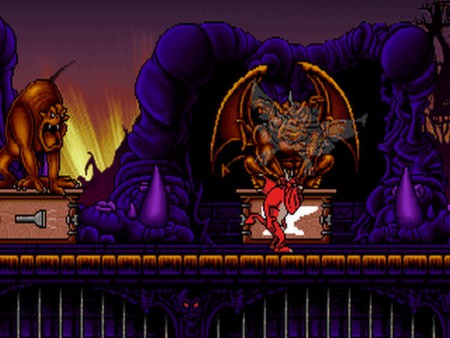
The sheer repetition of these punishment loops is where most playthroughs hit a wall. To finish a run without losing your mind, you need to master a few specific habits:
- Memorize hallway floor textures to spot spike traps before the camera pans over them.
- Save your coin stash for essential quest items at the shop rather than testing luxury purchases.
- Treat every new room as a trial run, noting collision points before attempting to solve the puzzle.
From primary school contest to Gremlin Interactive
The character of Mutt originated far away from traditional design studios. A primary school student named William Cummings created the little demon for a nationwide design contest hosted by Gremlin Interactive Ltd., earning himself the first finished copy of the release. Development originally began back in July 1990 under the title Little Divil, starting with a demo built by Emerald Software before main production shifted to Gremlin's Irish and Sheffield teams.
The project underwent major shifts during its three-year production span. Sideways-scrolling platformer adaptations were designed for the Super Nintendo and SEGA Mega Drive, while an Atari ST edition was abandoned due to high disk counts and falling computer sales. What ultimately landed on PC displays was a hybrid adventure that prioritized expressive character frames over smooth arcade handling.

Where the cartoon charm succeeds and stumbles
When gaming magazines reviewed Gremlin Interactive Ltd.'s project in early 1994, verdicts split drastically depending on how much patience the reviewer had for trial-and-error gameplay. French outlet Joystick awarded a high 90% score and Micromanía pushed even higher to 96%, both praising the presentation and cartoon style. Conversely, PC Gamer dumped a harsh 43% score on the game, citing heavy padding and clunky interaction mechanics.
Retesting the game today confirms that both sides had a point. The animation frames for Mutt's failures, stumbles, and idle movements remain surprisingly expressive, giving the Underworld genuine comedy. Yet the moment-to-moment gameplay feels padded, dragging out short logic puzzles through repeated resets and strict positioning requirements that do not enhance the fun.
How to play Litil Divil today
If you want to experience this piece of British gaming history without wrestling with old display modes, you can play Litil Divil free in your browser right now. It is an early nineties PC game through and through: heavy on visual personality, uncompromisingly difficult, and filled with strange puzzles that refuse to hold your hand.
You can launch the full MS-DOS release directly in your web browser with no setup required. The heavy animation frames and precise room positioning translate directly to modern screens, making it easy to test your patience against the Labyrinth of Chaos in just a few clicks.
How Litil Divil is played — the keys the game listens to, grouped by what they do.
- Movement
- Action
- Interface
Highlighted keys are mapped — hover or tap one to see what it does.
Key mapping can be configured via SETUP.EXE.
3 screenshots
From the archive
No gameplay video yet
No gameplay video for Litil Divil yet. Sign in to add one.
No reviews yet
Tell the community what you think of Litil Divil. Reviews are public and tied to your username.
No archived manuals for Litil Divil yet
No manuals archived for this title yet. Sign in to upload the first scan.
Cheat codes, console commands and memory pokes for Litil Divil — each one verified and attributed.
Sign in to submitNo cheats yet for this title
Know a working cheat, poke or trainer? Add it with the button above. Moderators check every entry before it goes live.
No archived soundtrack for Litil Divil yet
No soundtrack archived for this title yet. Sign in to upload the first rip.
No save states for Litil Divil yet
No save states for this title yet. Sign in to share one.
Discussions
Sign in to post- Threads0
- Total posts0
- Online now6
Community · Litil Divil
Who's contributing, and what's new
- Reviews0
- Threads0
- Uploadsapproved0
- Contributors0
Recent activity
Nothing here yet
Reviews, discussion threads and approved uploads appear here as members add them.