Taking back Earth was only half the job in Quake Mission Pack 2: Dissolution of Eternity, an expansion that swaps standard sci-fi military corridors for medieval castles, Egyptian pyramids, and alt-fire ammunition.
Swapping base ammo for cluster grenades changes how you clear room fights
The moment you swap standard rockets for multi-rockets in Quake Mission Pack 2: Dissolution of Eternity, the combat rhythm shifts completely. Instead of punching a single explosive hole in a hallway, your salvo splits horizontally, shredding whole formations of incoming monsters across wider choke points. Rogue Entertainment chose not to give you entirely new guns, opting instead to outfit Ranger's existing armory with alternate fire modes. Your nailgun fires searing lava nails, your grenade launcher drops cluster munitions that carpet floor grids, and your Thunderbolt discharges energy using plasma cells.
That design choice turns crowd control into an entirely different tactical puzzle. Phantom Swordsmen block incoming direct shots with their blades, meaning a direct rocket often wastes ammo, but bouncing cluster grenades around their ankles tears right through their defense. Out in open water, Electric Eels force you off the surface and into murky depths where your standard explosive strategy will get you killed. Fighting off multi-grenade Ogres while balancing on narrow stone piers shows off just how aggressive the encounter density gets early on.
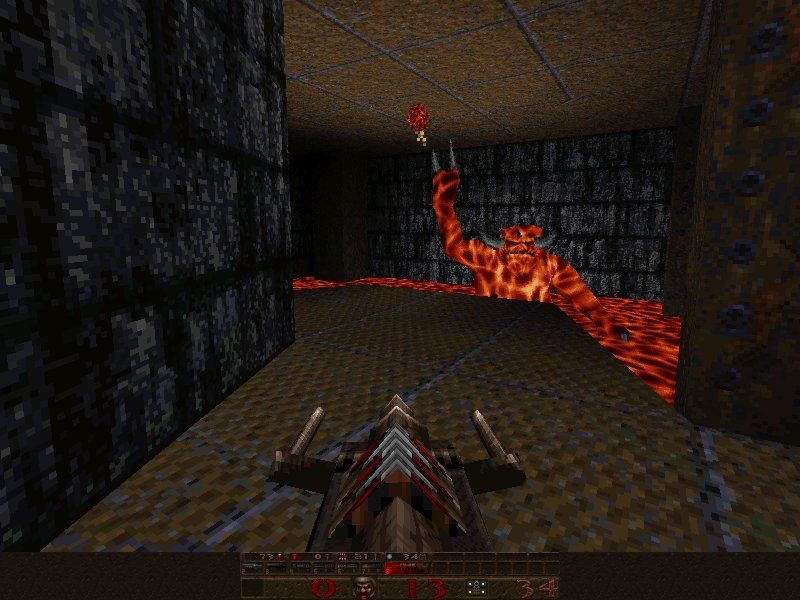
The two-episode split puts its strongest levels behind a dull opening
If you judge this expansion solely on its first few maps, period reviewers who panned it start to make sense. Episode 1, titled Hell's Fortress, stays heavily within the brown medieval dungeon aesthetic that players had already cleared dozens of times in the base game. It feels repetitive and slow, packed with narrow corridors and high monster density that leans heavily on brute force. The initial levels drag, making the early hours feel more like an exercise in clearing corridors than exploring new ground.
Episode 2, named The Corridors of Time, is where the level designers finally let loose. You step through dimensions into ancient Egyptian tombs, Aztec pyramids, and stone temples lined with animated statues and bladed pendulums. Puzzles shift from simple key hunts to navigating collapsing bridges, jumping across electrified barriers, and dodging swinging traps while fighting Wraths from above. The shift in visual identity gives the second half a personality that the opening act desperately lacks.
Platforming gimmicks and a frustrating final dragon hamper the late game
Rogue Entertainment attempted to freshen up the original engine by adding vertical movement tools and platforming challenges. The Anti Grav Belt lets you float across huge gaps, and a dedicated grappling hook lets you zip toward geometry in multiplayer and custom scenarios. In practice, long platforming sequences slow down the fast, precise movement that made the base shooter so good. Missing a jump because of floaty gravity controls usually means falling straight into an acid pit or an electric mesh.
The end of the campaign hits an even rougher wall with its boss encounters. You fight Lava Men, Overlords, and gigantic Wraths leading up to the final chamber, where a giant dragon guards a temporal energy converter. Computer and Video Games gave the package an 80% score upon release, while Computer Gaming World went as high as 100%, but modern players frequently single out this final dragon fight as janky and unrewarding. I found myself battling awkward hitboxes and stubborn movement scripting more than the actual beast, making the climax feel like an chore rather than a victory.
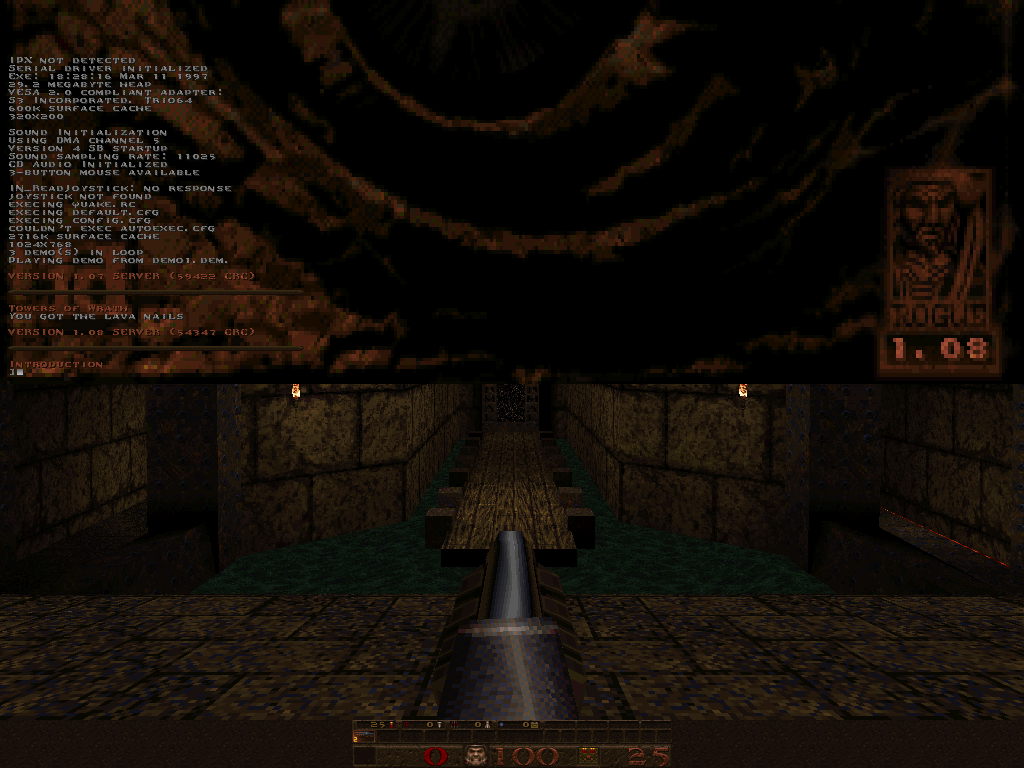
New gear and audio polish make this classic add-on worth running
Despite its weak opening maps and clumsy platforming sections, this expansion is a great target for anyone looking for a tough classic shooter challenge. James Grunke composed a fresh set of CD audio tracks that fit the temporal theme perfectly, and the overall package delivered far more mechanical changes than most add-ons of its day. If you want to sample 1997 expansion design, this release stands alongside the best work id Software, Inc. authorized for their engine.
Here is a short look at what sets this campaign apart from standard level packs:
- Alternative ammunition types for four standard weapons, including horizontal multi-rockets and plasma cells.
- New enemy types like Mummies, Hell Spawn, and acid-shooting statues that demand quick weapon switches.
- Survival powerups like the Power Shield to mitigate high environmental and combat damage.
- A dedicated Capture the Flag arena map named Division of Change included alongside the campaign.
You can play Quake Mission Pack 2: Dissolution of Eternity online right now in a quick session. If you want to experience a complete Rogue Entertainment release, launching this Quake Mission Pack 2: Dissolution of Eternity MS-DOS game directly gives you the entire campaign without any setup hassle.
Jump into the action instantly
You can run Quake Mission Pack 2: Dissolution of Eternity free in your browser right here. As soon as the main menu loads, launch straight into Episode 2 to skip the dreary initial castle corridors and jump right into the tomb hazards and multi-rocket combat.