Before official expansion packs dominated store shelves, Shrak for Quake tried to reshape id Software's brown corridors into a puzzle-heavy sci-fi shooter where you inflated mutants until they popped. Flying into a ruined post-apocalyptic Earth as a recon pilot named Duncan, you trade typical rocket launchers for grappling hooks, utility belts, and mind-control darts.
Quantum Axcess built Shrak for Quake to turn id's engine into a gadget shooter
By 1997, commercial Quake modifications were fighting for room on computer shop shelves alongside official releases. Developer Quantum Axcess published their total conversion as a $19.99 retail box, offering nineteen levels, a central hub map, and a mechanical overhaul that barely resembled id's original design. Outside of keeping the trusty double-barrelled shotgun, producer Stephan Smith and his team replaced nearly every weapon, enemy, and environmental texture in this 1997 release.
You play as Duncan, a pilot sent to survey Earth after a cataclysm leaves the planet overrun by mutants under the control of a warlord named Shrak. After your ship crashes, you stop hunting for gold keys in gothic castles and start exploring underground research labs, polluted sewers, and abandoned mines. Level designers Dan C. Trethaway III, Chris Carollo, David Reid, and Michael Wardwell structured the campaign around departure and return, forcing you to move back and forth through a central hub as you uncover new equipment.
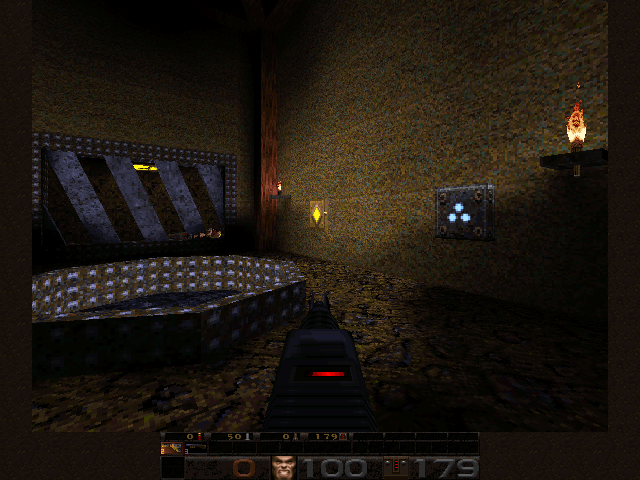
Floating eyes, inflation guns, and a grappling hook that hates physics
The arsenal is where Quantum Axcess tried their boldest ideas, replacing heavy artillery with tactical equipment. Combat encounters force you to switch gear constantly depending on room geometry and enemy types, moving away from simple circle-strafing.
Your utility belt and heavy equipment radically change how you approach encounters across the nineteen levels:
- Uzis: Rapid-fire dual submachine guns that replace the standard nailgun for close-quarters fighting.
- Inflator Gun: Pumps pressurized air into organic targets until they expand and burst into a shower of bloody debris.
- Foe-to-Friend Converter: Shoots a dart that turns hostile mutants into temporary allies who attack nearby enemies.
- Utility Belt: Deploys flares in pitch-black sewers, drops explosive plastique charges, and fires grappling hooks for vertical movement.
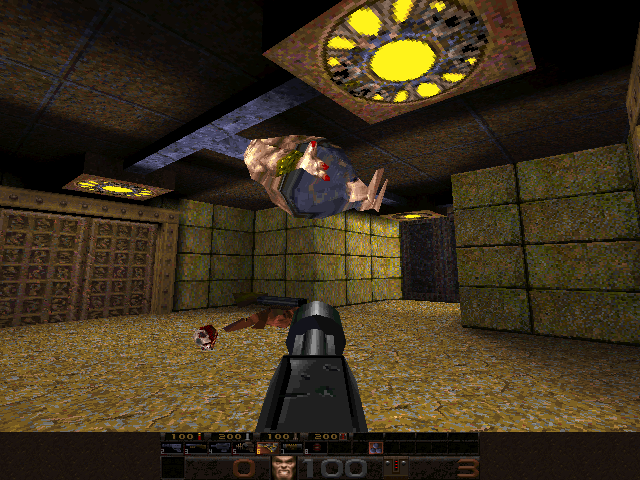
Fighting the enemy roster demands actual planning. You will face grenade-spitting crabs crawling through water pipes, floating electrified eyeballs that blind you in tight corridors, and heavily armed mutant soldiers. Boss battles like the confrontation with Ruckus Riot punish simple strafing, requiring you to utilize cover, manage plastique charges, and navigate treacherous lava pits to survive.
Retail add-ons in 1997 forced weird design choices
Reviewers in 1997 were split on whether the changes worked. GameSpot writer Hugo Foster awarded it a 7.7 out of 10 equivalent score, calling it "the thinking man's Quake" while praising its innovative lineup of weapons. Outlets like Computer Gaming World handed down a 70% rating, while PC Player and Adrenaline Vault settled on 80%, leaving the project with a 77% critic average. Every review noted a major flaw that players still complain about today: the sticky, floaty jumping controls that make precision platforming a chore.
The technical implementation behind the package was equally unusual for an unofficial commercial add-on. The retail disc used a custom setup executable named ST.EXE that directly patched Quake's original pak file texture dependencies under MS-DOS, injecting new graphics directly into the engine files. programmer Matt Walsh used custom QuakeC scripting to drive the new weapon logic, while sound designers Phil Lanese and John D. Matt Walsh paired their sound effects with an atmospheric ambient audio track composed by Bonetribe, streamed directly off the CD as standard Red Book audio.
Modern source ports break where the original MS-DOS version held together
If you try to run these files through modern community engines today, you will likely encounter technical walls. Popular source ports like Quakespasm frequently crash after completing the first hub map or when cycling through the utility belt too fast. The heavy QuakeC modifications relied on specific DOS memory handling that modern source ports do not handle correctly. Playing this as a pure Quantum Axcess product originally required a dedicated MS-DOS environment, and direct DOS emulators or specialized engines like DirectQ remain the only reliable ways to play without fatal crashes.
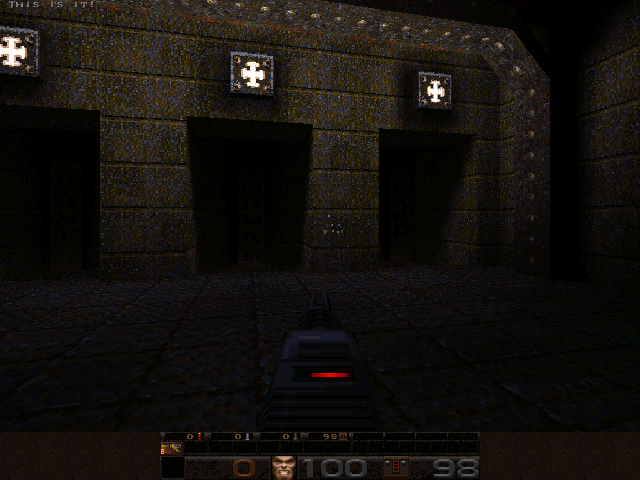
Progression can also grind to a sudden halt if you miss a single wall switch hidden in an unlit sewer. Combined with tricky lava jumping and grappling mechanics, it lacks the fast pace of id's original campaign. Yet for anyone interested in late nineties modding history, the dense level design and weird gadgetry offer something different from standard deathmatch additions, complete with custom Capture the Flag support for LAN games.
Load up Shrak for Quake free in your browser right now
You can play Shrak for Quake online directly on this page, loaded as a full Shrak for Quake MS-DOS game running right inside your browser window with zero installation headaches. You do not need to hunt down original retail CDs, run complex setup utilities, or patch pak files to experience this piece of 1997 gaming history.
If you want to see why critics called this a thinking man's shooter, boot it up and test out the inflator gun on the first group of mutants you encounter in the sewer hub. You can play Shrak for Quake free in your browser right now and see if your platforming skills can survive the grappling hook physics without downloading a single file.