Most turn-based strategy games of the nineties handed you standard military targets, but Spellcross threw modern heavy artillery into a meatgrinder against orcs, undead armies, and fire-breathing dragons.
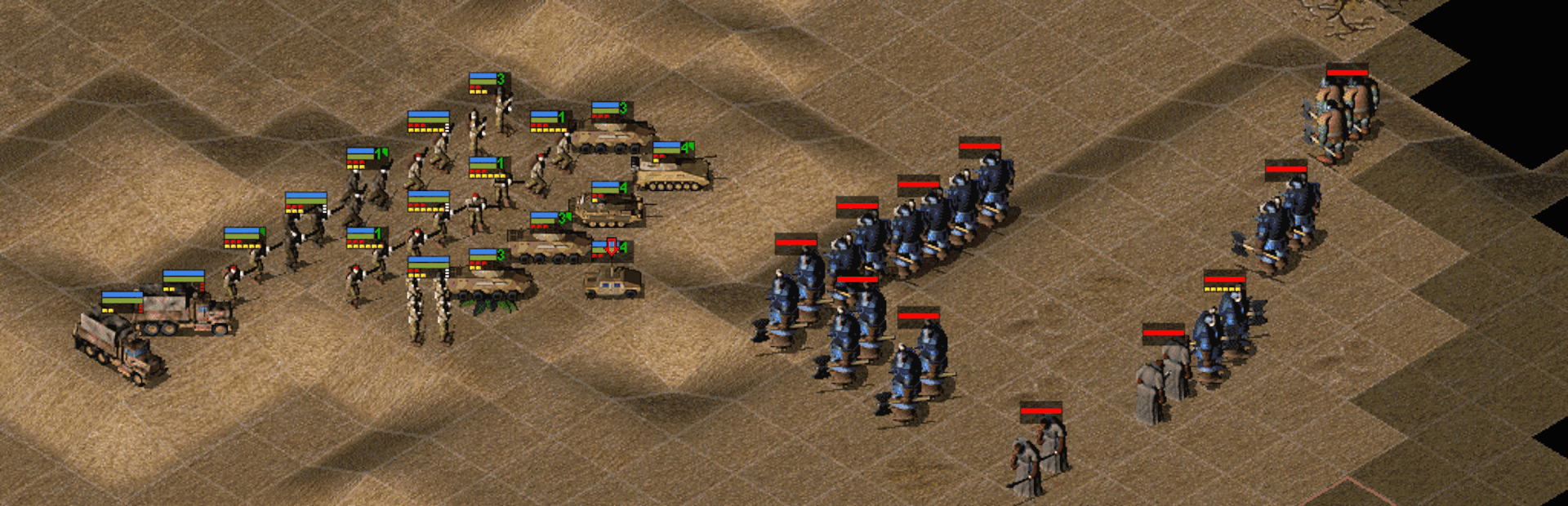
Commanding military hardware against mythical beasts sounds like a playground argument, but this isometric hex grid forces you to take every squad engagement seriously. As Colonel John Alexander, head of Earth's defense military known as The Alliance, you spend your tactical phases lining up infantry, helicopters, and heavy armor like the Bear 130 tank against extradimensional forces called The Other Side. You cannot simply roll forward and shell enemy positions. Skeletons and harpies slip through visual blind spots, while enemy warlords launch sudden ambushes that turn routine rearguard movements into pure panic.
Every battlefield uses tight line-of-sight checks and dense fog of war. Night missions make visual range even shorter, forcing you to rely on night vision gear and flare drops to avoid driving your armored columns directly into an infantry ambush. Period coverage in Finnish magazine Pelit rightly pointed out that enemy forces refuse to sit back and wait for you to build a perfect line. They counter-attack immediately, punishing anyone who tries to play this like a standard slow-paced campaign. The tactical positioning feels close to classic turn-based hex games, while the urgency of keeping squad veterans alive matches the pressure of field command.
Between battlefields, you manage a world map divided into tactical sectors. Conquest gains resources, but your primary job back at base is dissecting captured alien technology and dark artifacts. Researching enemy equipment unlocks vital defensive upgrades like Composite Armour and specialized defensive measures like the Shockcandle system. Without these technological upgrades, your front-line infantry will get sliced to shreds in seconds during mid-game missions.
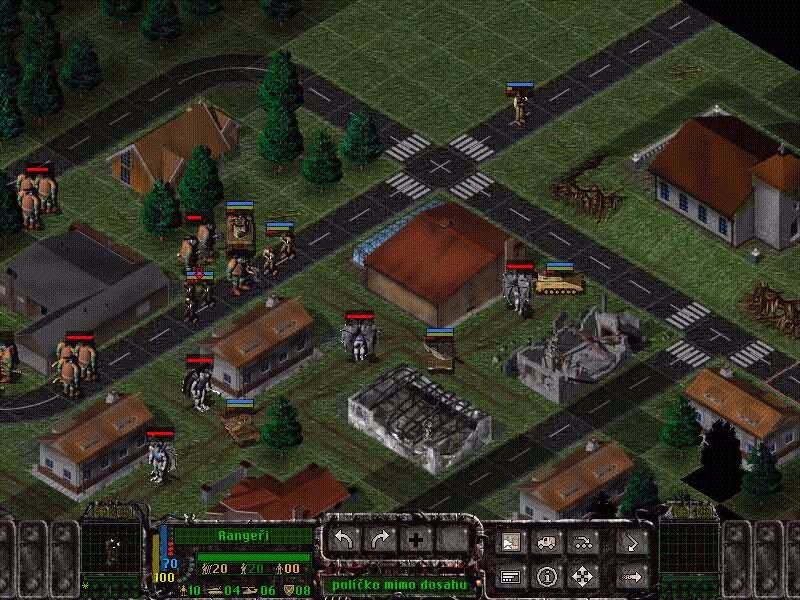
The campaign structure is demanding, and players often hit a wall early on. The learning curve jumps drastically within the first dozen maps, where fast orc raiders and dire wolves swallow unprepared infantry platoons whole in endless waves. Late-game engagements routinely drag on for two full hours as you inch forward through tight choke points under constant siege by Gatekeepers, demons, and dark elves. A single misplaced artillery unit can ruin a forty-minute advance, forcing a restart from the campaign map.
Bratislava-based studio Cauldron Ltd. built the game for MS-DOS, targeting high-end rigs equipped with a 486 running at 100MHz and 12 MB of RAM. The high-resolution SVGA graphics brought crisp, fluid animations to foot soldiers, flying harpies, and heavy armor alike. When hooked up to Sound Blaster hardware, the crunch of tank tracks and the scream of incoming spells sounded punchy, backed by heavy Red Book CD Audio music tracks played straight off the game disc.
Published by JRC Interactive, it was the first game from former Czecho-Slovakia to land a worldwide retail push. Marketing was nearly non-existent outside Central Europe, and releasing near the end of 1997 put it directly in competition with the industry's massive transition toward hardware-accelerated 3D engine graphics. While international commercial sales suffered, the game earned a dedicated regional following, particularly after being distributed as a cover-disc full release with Czech gaming magazine Excalibur in 1999.
The English campaign cut the original Czech release's 120 sectors down to roughly sixty missions spread across multiple acts. After grinding through dozens of grueling meatgrinder battles, you reach the final map, named Act 9 Armageddon (3) Endgame. Your goal is simple: escort Alexander across the field carrying an artifact blade to banish the sleeping Titan at Earth's core before dark cultists awaken it.
The strangest flaw in the entire design lies right here at the finish line. After struggling through brutal tactical meatgrinders for weeks, your end-game army is so absurdly upgraded with high-tier armor and heavy artillery that the final map plays like a victory lap. What should be the absolute hardest battle end up being one of the easiest levels in the game. Patch v1.04 at least smoothed out overall unit management by adding multi-unit group movement and cheat codes, fixing the tedious single-unit clicking that annoyed early players.
If you want a deep, challenging squad tactics game that trades boring realistic enemy platoons for fire-breathing dragons and skeletal archers, this isometric gem delivers. The difficulty spikes and late campaign balancing issues can feel harsh, but the sheer tension of defending modern military hardware against dark magic holds up surprisingly well. You can play Spellcross online free in your browser right now, offering a quick way to experience this rare 1997 DOS tactical release with zero setup required.
Most turn-based strategy games of the nineties handed you standard military targets, but Spellcross threw modern heavy artillery into a meatgrinder against orcs, undead armies, and fire-breathing dragons.
Commanding military hardware against mythical beasts sounds like a playground argument, but this isometric hex grid forces you to take every squad engagement seriously. As Colonel John Alexander, head of Earth's defense military known as The Alliance, you spend your tactical phases lining up infantry, helicopters, and heavy armor like the Bear 130 tank against extradimensional forces called The Other Side. You cannot simply roll forward and shell enemy positions. Skeletons and harpies slip through visual blind spots, while enemy warlords launch sudden ambushes that turn routine rearguard movements into pure panic.
Every battlefield uses tight line-of-sight checks and dense fog of war. Night missions make visual range even shorter, forcing you to rely on night vision gear and flare drops to avoid driving your armored columns directly into an infantry ambush. Period coverage in Finnish magazine Pelit rightly pointed out that enemy forces refuse to sit back and wait for you to build a perfect line. They counter-attack immediately, punishing anyone who tries to play this like a standard slow-paced campaign. The tactical positioning feels close to classic turn-based hex games, while the urgency of keeping squad veterans alive matches the pressure of field command.
Between battlefields, you manage a world map divided into tactical sectors. Conquest gains resources, but your primary job back at base is dissecting captured alien technology and dark artifacts. Researching enemy equipment unlocks vital defensive upgrades like Composite Armour and specialized defensive measures like the Shockcandle system. Without these technological upgrades, your front-line infantry will get sliced to shreds in seconds during mid-game missions.
The campaign structure is demanding, and players often hit a wall early on. The learning curve jumps drastically within the first dozen maps, where fast orc raiders and dire wolves swallow unprepared infantry platoons whole in endless waves. Late-game engagements routinely drag on for two full hours as you inch forward through tight choke points under constant siege by Gatekeepers, demons, and dark elves. A single misplaced artillery unit can ruin a forty-minute advance, forcing a restart from the campaign map.
Bratislava-based studio Cauldron Ltd. built the game for MS-DOS, targeting high-end rigs equipped with a 486 running at 100MHz and 12 MB of RAM. The high-resolution SVGA graphics brought crisp, fluid animations to foot soldiers, flying harpies, and heavy armor alike. When hooked up to Sound Blaster hardware, the crunch of tank tracks and the scream of incoming spells sounded punchy, backed by heavy Red Book CD Audio music tracks played straight off the game disc.
Published by JRC Interactive, it was the first game from former Czecho-Slovakia to land a worldwide retail push. Marketing was nearly non-existent outside Central Europe, and releasing near the end of 1997 put it directly in competition with the industry's massive transition toward hardware-accelerated 3D engine graphics. While international commercial sales suffered, the game earned a dedicated regional following, particularly after being distributed as a cover-disc full release with Czech gaming magazine Excalibur in 1999.
The English campaign cut the original Czech release's 120 sectors down to roughly sixty missions spread across multiple acts. After grinding through dozens of grueling meatgrinder battles, you reach the final map, named Act 9 Armageddon (3) Endgame. Your goal is simple: escort Alexander across the field carrying an artifact blade to banish the sleeping Titan at Earth's core before dark cultists awaken it.
The strangest flaw in the entire design lies right here at the finish line. After struggling through brutal tactical meatgrinders for weeks, your end-game army is so absurdly upgraded with high-tier armor and heavy artillery that the final map plays like a victory lap. What should be the absolute hardest battle end up being one of the easiest levels in the game. Patch v1.04 at least smoothed out overall unit management by adding multi-unit group movement and cheat codes, fixing the tedious single-unit clicking that annoyed early players.
If you want a deep, challenging squad tactics game that trades boring realistic enemy platoons for fire-breathing dragons and skeletal archers, this isometric gem delivers. The difficulty spikes and late campaign balancing issues can feel harsh, but the sheer tension of defending modern military hardware against dark magic holds up surprisingly well. You can play Spellcross online free in your browser right now, offering a quick way to experience this rare 1997 DOS tactical release with zero setup required.
How Spellcross is played — the keys the game listens to, grouped by what they do.
Highlighted keys are mapped — hover or tap one to see what it does.
Mouse is the main control. Key remapping and mouse sensitivity can be configured in DOSBox.
Cheat codes, console commands and memory pokes for Spellcross — each one verified and attributed.
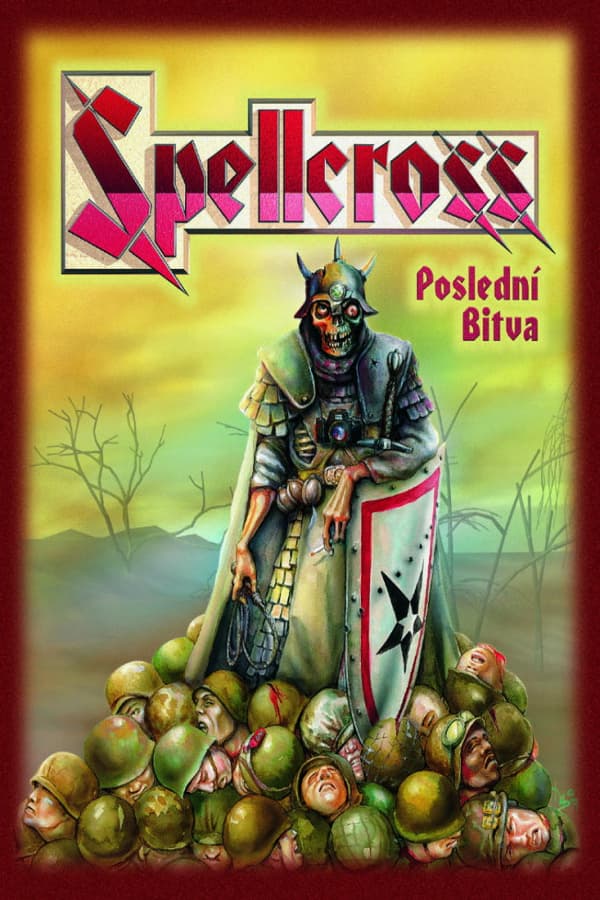
Sign in to submitaka Spellcross: Poslední Bitva
How Spellcross is played — the keys the game listens to, grouped by what they do.
Highlighted keys are mapped — hover or tap one to see what it does.
Mouse is the main control. Key remapping and mouse sensitivity can be configured in DOSBox.
Cheat codes, console commands and memory pokes for Spellcross — each one verified and attributed.
Sign in to submit